
The grounds of an international organisation are read as a statement of how the institution operates. A UN agency, a development bank, a regional body, or a diplomatic mission expects its compound to be consistent, well-kept, and dignified — not seasonally patchy, not waterlogged, not left to a casual crew. Landscapers Ghana designs, builds, and maintains institutional grounds to that standard across Accra, for over 35 years. Book a consultation: +233 23 063 0004.
Why International Organisations Design & Build With Landscapers Ghana
Institutional grounds are held to a higher and more constant standard than a private garden. The lawns, the entrance approach, the courtyard, and the planting are seen daily by staff, visiting delegations, and the public — and they are expected to look the same in the dry season as in the rains. We design and build institutional landscapes as a single deliberate scheme, then keep them on a maintenance plan so the standard holds across the year, not just on the day a delegation visits.
We have designed and built outdoor spaces for over 35 years — a real design-build firm with a portfolio, not a man with a hoe. International clients get a clear design and an itemised quote before any work, and a documented maintenance plan after, so facilities and administration know exactly what is delivered and what it costs.
What International Organisation Landscapes Demand
Institutional grounds carry an institutional-standard obligation.
A Consistent, Institutional-Standard Finish
The grounds have to look right every day, not just when prepared for an event. We design for low-fuss, year-round consistency — robust lawns, layered planting that holds its form, and hardscape that stays clean — and maintain to a fixed schedule so nothing drifts between visits.
Dignified, Considered Grounds
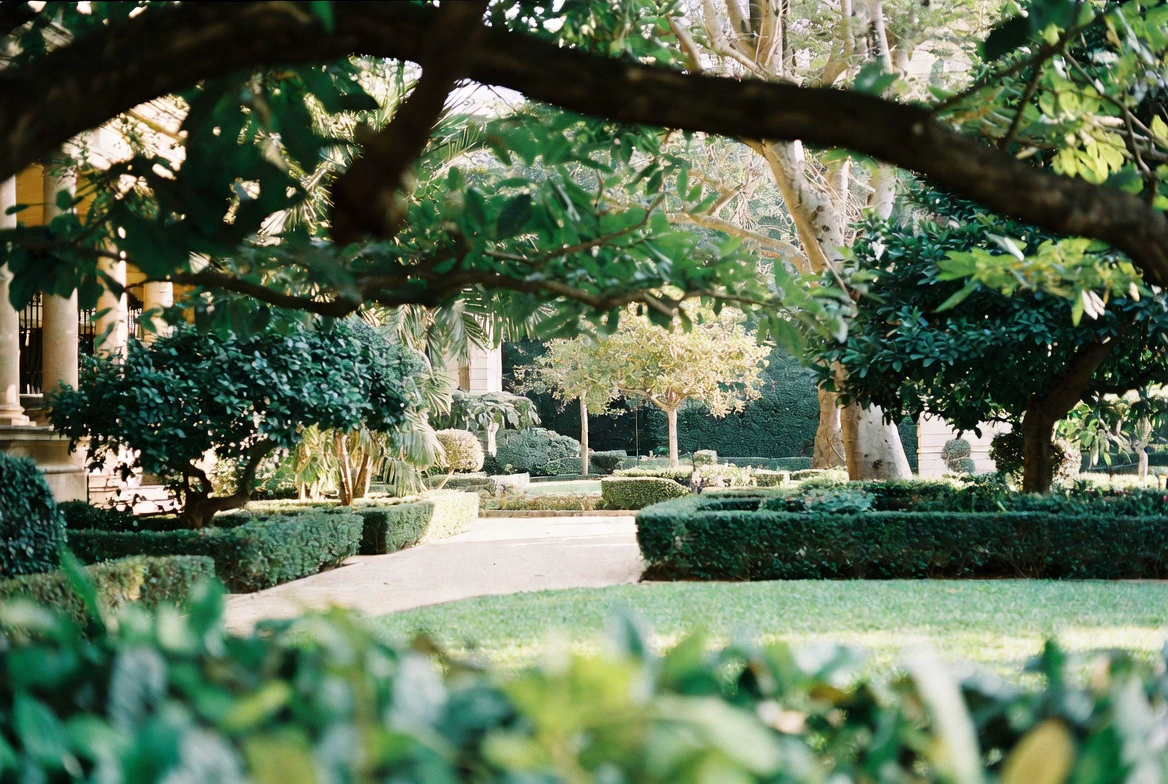
An international compound carries a certain weight. The entrance approach, the flagpole surround, the courtyard, and the public-facing edges are designed to read as ordered and dignified — considered planting and clean lines, not improvised beds.
Built to Last in Ghana’s Climate
We use carpet grass (Axonopus compressus) — Ghana’s hard-wearing lawn standard — and build the groundwork, drainage, and irrigation first, so the grounds survive the rains and hold through the dry season rather than failing in either.
Our International Organisation Scope
We take institutional grounds from design through build to ongoing care:
- Landscape Design & Build — the full compound, designed and built in the right order
- Garden Design & Installation — entrance, courtyard, and public-edge schemes designed and planted
- Hardscape Construction — entrance approaches, walkways, walls, edging, drainage
- Water Feature Installation — courtyard fountains and reflective features
- Commercial Grounds Maintenance — keeping the compound to standard, year-round
Done Right & Reliably
- Carpet grass (Axonopus compressus) — Ghana’s hard-wearing lawn standard, suited to the climate and to institutional footfall; planting chosen to thrive in local heat and rains, with honest advice when an imported look will not work here
- Any treatments use products registered with the EPA (under the Environmental Protection Agency Act, Act 490), applied responsibly
- Built groundwork-and-drainage first, then hardscape, irrigation, lawns, and planting — the sequence that decides whether grounds last or fail in the first rains
- In business over 35 years — a real design-build firm with a portfolio, shared on request
Consultation & Portfolio
We start with a site visit and a clear design — layout, hardscape, planting, irrigation — and an itemised quote, so administration sees the grounds and the cost before any work starts. Institutional landscaping is quoted per project: the size, the hardscape, the planting, and the irrigation drive the cost, so there is no honest single per-square-metre rate. Our portfolio is shared on request, and the ongoing maintenance plan is documented and photo-reported, so the standard is auditable.
International Organisation Grounds Across Accra
We design, build, and maintain institutional grounds across Cantonments, Ridge, Airport City, and the wider Greater Accra diplomatic and institutional belt — plus Kumasi and Takoradi. One standard, held year-round, across every site.